What Are the Payroll Compliance Updates in India After Budget 2026?
Indian employers don’t just process salaries — they manage regulatory accountability. Every change in national policy reshapes how payroll teams calculate deductions, structure salaries, and report contributions.
After Budget 2026, the landscape shifted again.
In short: Payroll compliance is no longer just about deductions — it is about digital readiness and structural alignment.
The payroll compliance updates India 2026 introduce operational adjustments that go beyond tax slab tweaks.
Why Should Employers Rethink Payroll Strategy After Budget 2026?
Budget 2026 didn’t just introduce tax refinements; it reshaped reporting mechanisms and compliance accountability.It requires employers to move from reactive compliance to structured payroll governance.
What Has Changed in Employer Responsibility?
- Greater emphasis on digital filings
- Higher transparency in deduction reporting
- Structured documentation requirements
- Increased audit traceability
- Standardized reporting expectations
Definition :
Payroll compliance now refers not only to correct deductions but also to accurate, digital, and traceable reporting of statutory contributions.
What Structural Shifts Define Payroll Compliance Updates India 2026?
It focuses on centralizing statutory reporting and reducing fragmentation across compliance portals. Instead of isolated filings, employers must adopt integrated payroll structures aligned with digital compliance systems.
What Operational Areas Are Most Impacted?
- Payroll reporting architecture
- Statutory deduction transparency
- Tax reconciliation processes
- Employer contribution validation
In short: Compliance is shifting from manual reporting to structured payroll ecosystems.
How Do the 2026 Updates Change Payroll Operations?
Under payroll compliance updates India 2026, payroll teams must ensure system-level alignment with updated deduction rules and digital submission standards. Manual adjustments are no longer sufficient; automation is becoming essential.
What Does This Mean Practically?
- Payroll software must be updated
- Salary templates may require restructuring
- Deduction reporting must be standardized
- Compliance reviews must become periodic
In short: Payroll is evolving from clerical processing to compliance management.
Why Are These Updates More About Systems Than Just Deductions?
While PF, ESI, and TDS remain central, It emphasize reporting accuracy and system validation over rate changes alone. Employers must ensure audit-ready documentation rather than just correct deduction percentages.
What Has Shifted?
- Greater digital tracking
- Real-time compliance validation
- Reduced tolerance for filing delays
- Standardized documentation frameworks
In short: System integrity now matters as much as salary calculation.
What Benefits Do Payroll Compliance Updates India 2026 Offer?
Benefit Overview Table
| Reform Focus | Employer Advantage | Estimated Operational Gain |
| Digital Reporting | Faster validation | +50% efficiency |
| Structured Filing | Fewer discrepancies | +40% accuracy |
| Centralized Monitoring | Reduced oversight risk | +35% control |
| Standardized Templates | Clear documentation | +30% clarity |
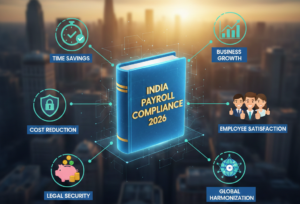
Although adjustments require effort, payroll compliance updates India 2026 ultimately reduce long-term administrative friction. Employers gain greater transparency and predictable compliance workflows.
In short: Structured compliance strengthens operational stability.
How Do 2026 Payroll Rules Compare to the Pre-Budget Environment?
Comparison Table
| Dimension | Pre-2026 Approach | Post-Budget 2026 Approach |
| Filing Style | Fragmented portals | Unified reporting |
| Compliance Monitoring | Manual review | Digital validation |
| Deduction Reconciliation | End-of-year heavy | Ongoing structured review |
| Audit Readiness | Reactive | Proactive |
In short: The shift is from fragmented compliance to coordinated governance.
What Risks Arise If Employers Ignore Payroll Compliance Updates India 2026?
Ignoring payroll compliance updates India 2026 can result in inconsistencies between payroll data and statutory filings. Digital compliance monitoring increases detection speed, making errors more visible and costly.
Compliance Risk Visualization
Compliance Risk Breakdown (Without Updates)
Data Mismatch Errors: █████████████ 30%
Late Filing Penalties: ███████████ 25%
Incorrect Reporting: █████████ 20%
Audit Observations: ████████████ 25%
More than half of payroll penalties arise from documentation gaps rather than deduction miscalculations.
In short: The risk lies in reporting inconsistency, not just numbers.
How Does This Apply to Businesses in India?
India’s compliance landscape differs across states such as Maharashtra, Karnataka, Gujarat, and Tamil Nadu. Employers operating in multiple cities must now ensure uniform reporting standards.
How does this apply to businesses in India?
For Indian businesses expanding across regions like Mumbai, Bengaluru, Delhi, and Ahmedabad, payroll compliance updates India 2026 standardize reporting expectations. This reduces state-level inconsistency but demands centralized payroll governance.
In short: Multi-location employers must align payroll systems nationally.
How Should Employers Strategically Respond in 2026?
- Conduct payroll architecture audits
- Align deduction reporting formats
- Automate statutory reconciliation
- Train HR teams on digital validation systems
Employers who treat payroll compliance updates India 2026 as a system transformation rather than a tax adjustment will adapt more effectively.
In short: Compliance strategy must evolve with regulation.
FAQs
What are payroll compliance updates India 2026 mainly focused on?
They focus on digital reporting integration, standardized statutory documentation, and improved audit readiness rather than just changing deduction percentages.
Do payroll compliance updates India 2026 change salary calculations?
In some cases yes, but the primary shift is in reporting transparency and compliance validation systems.
Are small businesses affected by these updates?
Yes. Even startups must align payroll systems with structured digital reporting expectations introduced after Budget 2026.
Is manual payroll still sustainable after 2026 reforms?
Manual systems increase risk due to digital compliance tracking. Automation is becoming essential for consistent reporting.
What is the biggest risk of ignoring compliance updates?
The biggest risk is mismatch between payroll records and statutory filings, leading to audit observations and penalties.
Conclusion: Is Payroll Compliance Entering a New Era in India?
The conversation around payroll after Budget 2026 is no longer about minor deduction tweaks. It is about structural integrity, digital reporting, and accountability.
The payroll compliance updates India 2026 signal a clear direction: compliance must be proactive, structured, and technology-driven.
In short: Employers must move from calculation-focused payroll to compliance-focused payroll governance.
Organizations that modernize early will reduce risk, strengthen trust, and operate confidently in India’s evolving regulatory environment.