Which Payroll Software Automatically Updates Budget 2026 Tax Changes?
Budget 2026 has introduced updates to tax slabs, PF thresholds, ESI limits, and reporting formats. Therefore, businesses must adjust payroll systems immediately. However, manual configuration creates risk. Even small delays can result in penalties and employee dissatisfaction.
In 2026, automatic updates are critical.
In short: Payroll automation ensures regulatory accuracy.
Many companies now seek payroll software Budget 2026 solutions that update tax rules automatically.
Why Is Automatic Payroll Software Budget 2026 Essential for Employers?
Direct Answer :
Payroll software Budget 2026 is essential because it updates tax rules automatically, ensuring compliance without manual intervention. Consequently, businesses reduce calculation errors and avoid penalties. Without automation, employers risk outdated deductions and reporting mistakes.
What Compliance Risks Exist Without Automation?
- Incorrect TDS deduction
- Delayed PF/ESI filings
- Manual data entry errors
- Audit complications
- Multi-state compliance mismatch
Definition :
Automated payroll software integrates regulatory updates into its system so that tax and contribution changes apply automatically.
What Features Should Payroll Software Budget 2026 Include?
Direct Answer :
The ideal payroll software Budget must offer automatic tax slab updates, dynamic PF and ESI calculation, and digital filing integration. Additionally, it should provide real-time compliance alerts.
What Key Features Matter Most?
- Auto-updated tax configuration
- Statutory threshold mapping
- Digital compliance reporting
- Secure cloud access
- Employee self-service portal
In short: Automation and real-time updates define compliance readiness.
How Does Payroll Software Automatically Update Budget 2026 Tax Changes?
Direct Answer :
Modern systems integrate government notifications into their backend. Therefore, when Budget 2026 tax changes occur, payroll software automatically adjusts deduction logic without manual reconfiguration.
How Does the Process Work?
- Monitor regulatory notifications
- Update tax rule database
- Apply revised thresholds
- Validate payroll calculations
- Generate compliant reports
In short: Technology eliminates manual intervention.
How Does Payroll Software Budget 2026 Improve Operational Efficiency?
Direct Answer :
By eliminating manual updates, payroll software Budget reduces administrative workload and ensures consistent accuracy. Consequently, HR teams focus on strategic initiatives rather than compliance troubleshooting.
What Efficiency Gains Are Achieved?
- Faster salary processing
- Reduced error correction
- Transparent payslip generation
- Centralized compliance dashboard
In short: Automation boosts productivity.
What Are the Benefits of Using Payroll Software Budget 2026?
While compliance automation requires investment, it delivers measurable advantages.
Benefit Overview Table
Feature | Employer Benefit | Estimated Impact |
Automatic Tax Updates | Accurate deductions | +50% precision |
| Compliance Alerts | Reduced penalties | +45% risk reduction |
| Digital Filing | Faster audits | +40% efficiency |
| Cloud Access | Multi-location control | +35% flexibility |
Direct Answer :
Using payroll software Budget strengthens compliance reliability and protects businesses from financial penalties. Consequently, employers maintain operational stability.
In short: Automated updates reduce regulatory exposure.
How Does Automated Payroll Compare to Manual Systems?
Comparison Table
| Feature | Manual Payroll | Automated Payroll Software |
Tax Updates | Manual configuration | Automatic updates |
| Deduction Accuracy | Error-prone | Real-time validation |
| Reporting | Time-consuming | Instant generation |
| Audit Risk | High | Lower |
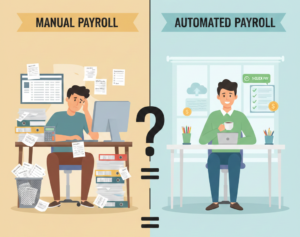
In short: Automation ensures consistent compliance.
What Is the Cost of Ignoring Automatic Payroll Updates?
Direct Answer :
Businesses that fail to adopt automated systems risk miscalculations and statutory penalties. Therefore, reliance on manual updates increases compliance exposure.
Payroll Risk Breakdown Chart
Payroll Compliance Risk After Budget 2026
Incorrect TDS: █████████████ 30%
Late Filings: ███████████ 25%
PF/ESI Errors: █████████ 20%
Audit Corrections: ████████████ 25%
More than half of payroll penalties stem from outdated tax configurations.
In short: Delayed updates create preventable financial loss.
How Does This Apply to Businesses in India?
Indian payroll compliance varies slightly across states such as Maharashtra, Karnataka, Gujarat, Tamil Nadu, and Delhi. However, national tax updates apply uniformly.
How does this apply to businesses in India?
Direct Answer :
For Indian businesses operating across multiple states, payroll software Budget ensures centralized compliance management. Consequently, organizations prevent inconsistencies in tax deductions between branches.
In short: Centralized automation strengthens regulatory alignment.
How Should Employers Choose Payroll Software for Budget 2026?
- Confirm automatic tax updates
- Verify PF, ESI, TDS integration
- Ensure secure cloud infrastructure
- Review compliance reporting features
- Compare scalability options
Direct Answer :
Employers evaluating payroll software Budget should prioritize automation, reliability, and compliance integration. Therefore, businesses safeguard payroll processes against regulatory disruption.
In short: Smart selection prevents compliance risk.
FAQs
Which payroll software automatically updates Budget 2026 tax changes?
Modern cloud-based payroll systems integrate government updates and adjust tax configurations automatically.
Does payroll software update PF and ESI limits automatically?
Yes. Advanced systems revise statutory thresholds based on official notifications.
Is payroll automation necessary for small businesses?
Yes. Automation reduces errors and simplifies compliance management.
Can automated payroll reduce audit risk?
Yes. Real-time compliance validation and digital reporting improve audit readiness.
How often should payroll systems be reviewed?
Employers should review systems after every major regulatory update or at least quarterly.
Conclusion: Why Should Businesses Adopt Automated Payroll Software in 2026?
Tax reforms require rapid system alignment. Therefore, employers must rely on intelligent automation to manage compliance efficiently.
The right payroll software Budget 2026 solution ensures automatic tax updates, accurate deductions, and audit-ready reporting.
In short: Automation safeguards profitability and compliance credibility.
Businesses that invest in modern payroll technology will maintain regulatory alignment and operational confidence throughout 2026 and beyond.