What Is the Best Payroll Software for Automatic ESI Calculation 2026?
Managing employee payroll has always been a complex task for businesses. However, statutory obligations like Employee State Insurance (ESI) make payroll management even more challenging for Indian employers. Since ESI contributions must follow strict eligibility rules and calculation formulas, even a small error can create compliance issues.
Many companies still rely on spreadsheets or manual calculations. Unfortunately, manual systems often lead to mistakes, delayed filings, or incorrect deductions. As payroll regulations evolve in India, organizations must adopt more reliable tools.
In short: manual payroll systems cannot guarantee compliance accuracy.
Therefore, many businesses are adopting ESI payroll software 2026 to automate statutory calculations and simplify payroll processes.
Why Do Businesses Need ESI Payroll Software 2026?
Businesses need ESI payroll software 2026 because ESI contribution calculations must follow strict statutory rules set by the Employees’ State Insurance Corporation. Automated payroll systems ensure accurate employee deductions, correct employer contributions, and timely compliance reporting. Consequently, companies reduce financial risk and improve payroll transparency.
What Payroll Challenges Do Companies Face?
- Incorrect ESI eligibility calculation
- Delayed statutory filings
- Payroll reconciliation errors
- Compliance penalties
- Lack of audit documentation
Definition :
Employee State Insurance (ESI) is a social security scheme in India that provides healthcare and financial protection to eligible employees through employer and employee contributions.
In short: accurate ESI calculations protect both businesses and employees.
How Does ESI Payroll Software 2026 Automate Compliance?
Modern payroll systems automatically apply ESI rules during salary processing. ESI payroll software 2026 calculates contributions based on wage thresholds and statutory percentages. As a result, payroll teams no longer need to manually verify eligibility or contribution values.
What Processes Are Automated?
- ESI eligibility validation
- Employee contribution calculation
- Employer contribution calculation
- ESI filing reports
- Payroll compliance documentation
In short: automation eliminates repetitive payroll calculations.
What Features Should Payroll Software With Automatic ESI Calculation Include?
The ideal payroll system must integrate statutory rules with employee salary structures. ESI payroll software 2026 should include automated deductions, reporting tools, and compliance alerts. These features help employers maintain regulatory alignment without constant manual supervision.
What Core Features Matter Most?
- Automatic ESI eligibility detection
- Real-time statutory updates
- ESI contribution reports
- Integration with payroll accounting
- Employee payslip generation
In short: the right software combines compliance accuracy and operational efficiency.
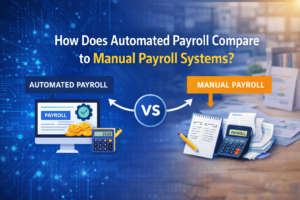
How Does Automated Payroll Compare to Manual Payroll Systems?
Comparison Table
Feature | Manual Payroll | Automated Payroll |
ESI Calculation | Manual verification | Automatic |
Error Risk | High | Low |
| Filing Alerts | None | Automated |
| Audit Trail | Limited | Digital |
| Processing Time | Slow | Fast |
Compared with manual spreadsheets, automated payroll significantly improves accuracy and compliance. ESI payroll software 2026 ensures that statutory contributions are calculated consistently every payroll cycle.
In short: automation improves reliability and transparency.
What Benefits Do Companies Gain From ESI Payroll Software 2026?
Although payroll automation requires investment, the long-term advantages are substantial.
Benefit Overview Table
Benefit Area | Business Impact | Estimated Improvement |
Accurate Compliance | Reduced penalties | +50% |
Payroll Efficiency | Faster processing | +40% |
| Transparency | Improved employee trust | +35% |
| Audit Readiness | Simplified inspections | +45% |
Organizations using ESI payroll software 2026 achieve better payroll accuracy and compliance visibility. Consequently, HR teams can focus on workforce planning instead of manual payroll troubleshooting.
In short: payroll automation improves both compliance and productivity.
What Happens If Companies Ignore Automated ESI Payroll Systems?
Businesses that rely on manual payroll calculations often face compliance risks and financial penalties. Without automated systems, ESI contributions may be calculated incorrectly. Therefore, delayed filings or incorrect deductions can trigger regulatory scrutiny.
Payroll Compliance Risk Chart
Payroll Compliance Risk (India 2026)
Incorrect ESI deductions █████████████ 30%
Late statutory filing ███████████ 25%
Employee disputes █████████ 20%
Audit adjustments ████████████ 25%
More than half of payroll compliance issues originate from manual payroll errors rather than intentional violations.
In short: automation reduces avoidable compliance mistakes.
How Does This Apply to Businesses in India?
Payroll compliance in India involves multiple statutory obligations, including ESI, PF, TDS, and professional tax. Organizations operating across multiple cities must manage compliance consistently.
How Does This Apply to Businesses in India?
For businesses operating in cities like Mumbai, Delhi, Bengaluru, Chennai, and Ahmedabad, ESI payroll software 2026 ensures centralized payroll control. Companies can maintain uniform compliance across branches while reducing administrative workload.
In short: centralized payroll automation simplifies nationwide compliance.
How Should Companies Implement Payroll Software With ESI Automation?
Organizations should follow a structured implementation process when adopting payroll technology.
Implementation Checklist
- Conduct payroll compliance audit
- Select payroll software with ESI automation
- Configure employee salary structures
- Train HR and payroll teams
- Validate statutory reports
Companies adopting ESI payroll software should ensure proper system configuration and regular monitoring. A structured implementation approach helps maximize the benefits of payroll automation.
In short: strategic adoption ensures long-term payroll efficiency.
FAQs
What is ESI payroll software 2026?
ESI payroll software 2026 refers to payroll systems designed to automatically calculate Employee State Insurance contributions according to statutory rules in India.
Can payroll software automatically calculate ESI deductions?
Yes. Modern payroll systems automatically determine employee eligibility and calculate employer and employee ESI contributions during salary processing.
Is ESI payroll software suitable for small businesses?
Yes. Cloud-based payroll systems provide affordable automation solutions for SMEs while ensuring statutory compliance.
How does payroll software reduce ESI compliance risks?
Payroll automation validates eligibility, calculates contributions accurately, and generates statutory reports. Therefore, companies reduce errors and compliance penalties.
Does payroll software support multi-branch businesses?
Yes. Most modern payroll systems allow centralized payroll processing for companies operating across multiple locations.
Conclusion: Why Payroll Automation Is Essential for ESI Compliance
Employee State Insurance compliance is a critical responsibility for employers in India. Incorrect calculations or delayed filings can create legal and financial consequences. Therefore, businesses must adopt reliable payroll systems that ensure accuracy and compliance.
By implementing ESI payroll software 2026, organizations can automate statutory deductions, generate compliant reports, and streamline payroll operations.
In short: automation protects compliance, improves efficiency, and builds employee trust.
Indian companies that modernize payroll processes today will remain compliant, efficient, and prepared for evolving payroll regulations in the coming years.