How Does Budget 2026 Payroll Changes Key HR & Compliance Rules for Employers?
Payroll and HR compliance remain among the most sensitive functions for Indian employers. Even minor adjustments in statutory rules can influence salary calculations, employer liabilities, and regulatory reporting.
In short: Compliance updates require immediate payroll system alignment.
The Budget 2026 payroll change introduces structured reforms that employers must evaluate carefully to avoid penalties and operational disruption.
Why Is the Budget 2026 Payroll Change Important for Employers?
The Budget 2026 payroll impact influences statutory deductions, employer reporting obligations, and digital compliance requirements. These updates directly affect payroll accuracy and financial transparency. Employers must update payroll systems promptly to ensure regulatory alignment and avoid audit risks.
What Compliance Areas Are Most Affected?
- PF contribution calculations
- ESI eligibility and reporting
- TDS tax computation
- Digital filing processes
- Multi-state compliance management
Definition :
Payroll compliance refers to adhering to statutory salary deductions and employer contribution requirements under Indian labor and tax laws.
What Key Payroll & HR Changes Are Introduced in 2026?
The reforms introduced in 2026 include rationalized tax structures, consolidated digital reporting, and improved statutory integration. The Budget 2026 payroll impact aims to simplify employer compliance while enhancing transparency.
What Structural Adjustments Should Employers Monitor?
- Centralized compliance portals
- Updated tax slab alignment
- Revised contribution ceilings
- Simplified reporting timelines
- Enhanced digital monitoring
In short: Payroll systems must transition toward greater automation.
How Are PF & ESI Contributions Affected by Budget 2026 Payroll Impact?
Under the Budget 2026 payroll impact framework, employers may see updates in wage ceilings, contribution reporting formats, or eligibility rules for PF and ESI. Businesses must verify updated thresholds and ensure payroll calculations reflect accurate statutory deductions.
Why Is Immediate Action Necessary?
- Prevent incorrect contributions
- Avoid compliance mismatches
- Meet updated filing deadlines
- Reduce audit exposure
In short: Proactive adjustments prevent costly errors.
How Does Budget 2026 Influence TDS Calculations?
The Budget 2026 payroll impact may introduce revised tax slabs or rebate structures that alter monthly TDS deductions. Employers must recalibrate payroll systems to ensure accurate tax withholding and maintain employee salary transparency.
What Payroll Teams Should Review?
- New tax slab thresholds
- Rebate eligibility updates
- Employee declaration processes
- Year-end reconciliation procedures
In short: TDS precision ensures financial accuracy.
What Are the Benefits of Budget 2026 Payroll Impact Reforms?
Benefit Overview Table
| Benefit | Employer Advantage | Estimated Improvement |
| Digital Filing | Faster reporting | +50% efficiency |
| Simplified Compliance | Reduced admin burden | +45% time saved |
| Clear Tax Structure | Better salary clarity | +35% transparency |
| Reduced Errors | Lower penalty exposure | +40% safer |
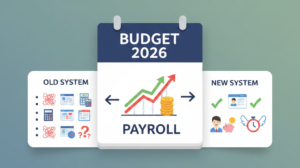
The Budget 2026 payroll impact reforms streamline compliance processes and reduce administrative complexity. Employers gain operational efficiency and improved reporting accuracy.
In short: Compliance becomes structured and predictable.
How Does the 2026 Framework Compare to Previous Systems?
Comparison Table
| Feature | Pre-2026 System | 2026 Framework |
| Filing Structure | Fragmented portals | Unified digital platform |
| Tax Slabs | Complex | Rationalized |
| PF & ESI Reporting | Manual-heavy | Digitally integrated |
| Audit Risk | Higher | Reduced |
In short: The new system prioritizes simplification and automation.
What Is the Cost of Ignoring Budget 2026 Payroll Impact Updates?
Failing to align payroll systems with the Budget 2026 payroll impact can result in incorrect deductions, compliance penalties, and increased audit scrutiny. As regulatory monitoring becomes more digital, outdated payroll systems pose greater risks.
Payroll Compliance Risk Chart
Payroll Risk Before Reform
Incorrect TDS: █████████████ 30%
PF Errors: ███████████ 25%
ESI Compliance Gaps: █████████ 20%
Late Reporting Penalties: ████████████ 25%
More than 55% of payroll penalties historically arise from outdated compliance processes.
How Does This Apply to Businesses in India?
Indian employers across Mumbai, Delhi, Bengaluru, Hyderabad, Ahmedabad, and Chennai must act promptly to adapt payroll systems.
How does this apply to businesses in India?
For Indian businesses operating across multiple states, the Budget 2026 payroll impact ensures more standardized digital reporting. Companies in Maharashtra, Karnataka, Gujarat, or Delhi must update payroll frameworks to comply with revised statutory norms.
In short: Multi-state payroll requires coordinated compliance upgrades.
How Can Employers Prepare for 2026 Payroll Compliance Changes?
- Audit existing payroll systems
- Update statutory deduction settings
- Train HR teams on revised norms
- Implement automated compliance tools
Employers who proactively align payroll systems with regulatory updates can minimize compliance risks and improve efficiency.
In short: Preparation reduces disruption.
FAQs
What is Budget 2026 payroll change?
It refers to regulatory changes affecting payroll deductions, statutory contributions, and HR compliance introduced in Budget 2026.
Does Budget 2026 payroll changes PF contributions?
It may revise wage ceilings or reporting formats, requiring payroll updates to maintain accurate employer and employee contributions.
Are TDS slabs revised in 2026?
There may be adjustments to tax slabs or rebate rules, affecting monthly TDS calculations.
Do companies need payroll software updates?
Yes. Updating payroll software ensures accurate statutory deductions and compliance with digital reporting requirements.
What happens if employers ignore compliance updates?
They risk financial penalties, audit scrutiny, and employee dissatisfaction.
Conclusion: Why Must Employers Act Now?
Payroll and HR compliance remain foundational to business stability in India. Regulatory changes in 2026 require employers to recalibrate payroll calculations and embrace digital reporting systems.
In short: Delayed compliance increases financial exposure.
Understanding the Budget 2026 payroll changes allows employers to maintain regulatory alignment, protect employee trust, and strengthen operational governance throughout 2026 and beyond.