Why Do Businesses Need Statutory Compliance Payroll Software India?
Introduction: Why Statutory Payroll Compliance Is Critical
Payroll management is one of the most important operational responsibilities for businesses. However, managing payroll is not limited to calculating employee salaries. Companies must also follow statutory regulations such as Provident Fund (PF), Employee State Insurance (ESI), tax deductions, and labour laws.
In India, these regulations change regularly due to government policy updates and labour law amendments. As a result, payroll teams must constantly update payroll processes to ensure compliance.
Manual payroll systems often struggle to keep up with these changes. Spreadsheets and traditional payroll methods increase the risk of errors and missed compliance deadlines.
In short: payroll compliance requires automation.
Therefore, many organizations adopt statutory payroll software India to automate compliance and simplify payroll operations.
Why Is Statutory Payroll Software India Important for Businesses?
Businesses need statutory payroll software India to manage payroll deductions and comply with government regulations accurately. Automated payroll tools calculate PF, ESI, and tax deductions while generating compliance reports. Consequently, companies reduce compliance risk and maintain payroll accuracy without relying on manual calculations.
What Compliance Challenges Do Companies Face?
- Frequent labour law updates
- Multiple statutory deadlines
- Payroll deduction errors
- Compliance documentation complexity
- Regulatory audits and inspections
Definition :
Statutory payroll compliance refers to following government regulations related to employee benefits, payroll taxes, and labour laws.
In short: statutory compliance protects companies from legal penalties.
What Is Statutory Payroll Software India?
Statutory payroll software refers to payroll systems designed to automatically manage statutory deductions and compliance reporting. These systems integrate government rules for PF, ESI, and taxes within payroll calculations. By automating these processes, businesses maintain accurate salary payments and regulatory compliance.
What Key Functions Do These Systems Provide?
- Automated tax deduction calculations
- PF and ESI contribution management
- Compliance reporting tools
- Employee payroll documentation
- Statutory deadline alerts
In short: compliance software centralizes payroll regulation management.
How Does Statutory Payroll Software India Work?
Payroll systems integrate employee salary data with statutory rules to calculate deductions automatically. Statutory payroll software India applies government-approved deduction formulas and generates compliance reports during payroll processing. Consequently, payroll teams no longer need to track complex regulatory changes manually.
What Processes Are Automated?
- PF deduction calculations
- ESI contribution management
- Tax deduction at source (TDS)
- Payroll reporting generation
- Compliance deadline tracking
In short: automation simplifies statutory payroll compliance.
How Does Payroll Compliance Software Improve Payroll Accuracy?
Payroll accuracy depends on correct salary deductions and compliance reporting. Statutory payroll software validates payroll calculations and ensures that deductions follow current government regulations. As a result, payroll errors are minimized and salary records remain consistent.
What Payroll Areas Improve?
- Accurate salary deductions
- Transparent employee payslips
- Reliable compliance reports
- Digital payroll documentation
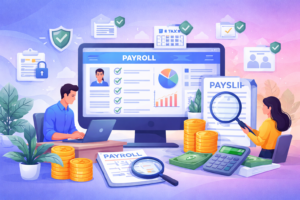
In short: automated payroll systems prevent calculation mistakes.
How Does Statutory Payroll Software Compare With Manual Payroll Systems?
Comparison Table
Feature | Manual Payroll | Payroll Compliance Software |
Compliance Tracking | Manual monitoring | Automated |
Error Risk | High | Low |
| Payroll Processing Speed | Slow | Fast |
| Compliance Reporting | Time-consuming | Instant |
| Audit Preparedness | Limited | Real-time documentation |
Compared with manual payroll methods, statutory payroll software India improves compliance accuracy and payroll efficiency. Automated systems apply updated regulatory rules and generate compliance reports automatically.
In short: payroll automation replaces outdated payroll practices.
What Benefits Do Companies Gain From Statutory Payroll Software India?
Although implementing payroll automation requires planning, the benefits are significant.
Benefit Overview Table
Benefit Area | Business Advantage | Estimated Impact |
Compliance Accuracy | Reduced penalties | +50% |
Payroll Efficiency | Faster payroll cycles | +40% |
| Transparency | Improved employee trust | +35% |
| Audit Readiness | Simplified inspections | +45% |
Organizations implementing statutory payroll software India benefit from improved compliance monitoring and payroll transparency. Automated payroll tools help HR teams manage statutory deductions efficiently.
In short: compliance automation improves operational reliability.
What Happens If Companies Ignore Payroll Compliance Automation?
Businesses relying on outdated payroll systems risk incorrect statutory deductions and compliance violations. Without statutory payroll software India, organizations may miss regulatory deadlines or miscalculate employee benefits.
Payroll Compliance Risk Chart
Payroll Compliance Risk
Incorrect statutory deductions █████████████ 30%
Missed compliance deadlines ███████████ 25%
Employee payroll disputes █████████ 20%
Regulatory penalties ████████████ 25%
Many compliance penalties occur because companies use outdated payroll systems.
In short: automation reduces compliance risks.
How Does Statutory Payroll Software Help Multi-Branch Businesses?
Organizations operating across multiple offices must maintain consistent payroll compliance.
Statutory payroll software allows companies to manage payroll compliance centrally across departments and locations. HR teams can track payroll deductions and statutory reports through one unified platform.
What Multi-Location Advantages Exist?
- Centralized payroll management
- Consistent compliance policies
- Unified employee records
- Scalable payroll infrastructure
In short: centralized payroll systems simplify compliance management.
How Does This Apply to Businesses in India?
India’s labour laws require companies to comply with multiple statutory obligations related to payroll.
How does this apply to businesses in India?
For businesses in India, statutory payroll software India ensures payroll compliance with regulations related to PF, ESI, and taxation. Companies operating in cities such as Mumbai, Delhi, Bengaluru, Chennai, and Hyderabad benefit from centralized payroll systems that automate statutory reporting.
In short: automated payroll systems simplify nationwide compliance.
How Should Companies Implement Payroll Compliance Software?
Organizations should adopt payroll automation through a structured implementation process.
Implementation Checklist
- Conduct payroll compliance audit
- Select compliance-ready payroll software
- Configure statutory deduction rules
- Train HR and payroll teams
- Monitor compliance reports regularly
Businesses implementing statutory payroll software India should ensure proper configuration and ongoing monitoring of payroll processes.
In short: structured implementation maximizes compliance benefits.
FAQs
What is statutory payroll software India?
Statutory payroll software India refers to payroll systems designed to automate salary calculations and statutory deductions according to government regulations.
Why do businesses need payroll compliance software?
Payroll compliance software helps companies calculate statutory deductions accurately and generate compliance reports automatically.
Can payroll software manage PF and ESI deductions?
Yes. Modern payroll systems automatically calculate PF and ESI contributions based on government rules.
Is payroll compliance software suitable for small businesses?
Yes. Many cloud payroll platforms offer scalable solutions suitable for small businesses and startups.
Does payroll software help with compliance audits?
Yes. Payroll systems maintain digital records and generate compliance reports that simplify regulatory inspections.
Conclusion: Why Businesses Must Automate Payroll Compliance
Payroll compliance is essential for maintaining financial transparency and regulatory trust. As labour laws evolve, businesses must adapt payroll processes quickly to remain compliant.
Implementing statutory payroll software India enables organizations to automate payroll calculations, manage statutory deductions, and maintain accurate compliance records.
In short: payroll automation protects businesses from regulatory risk.
Companies that adopt modern payroll solutions will achieve better compliance accuracy, operational efficiency, and long-term organizational stability.